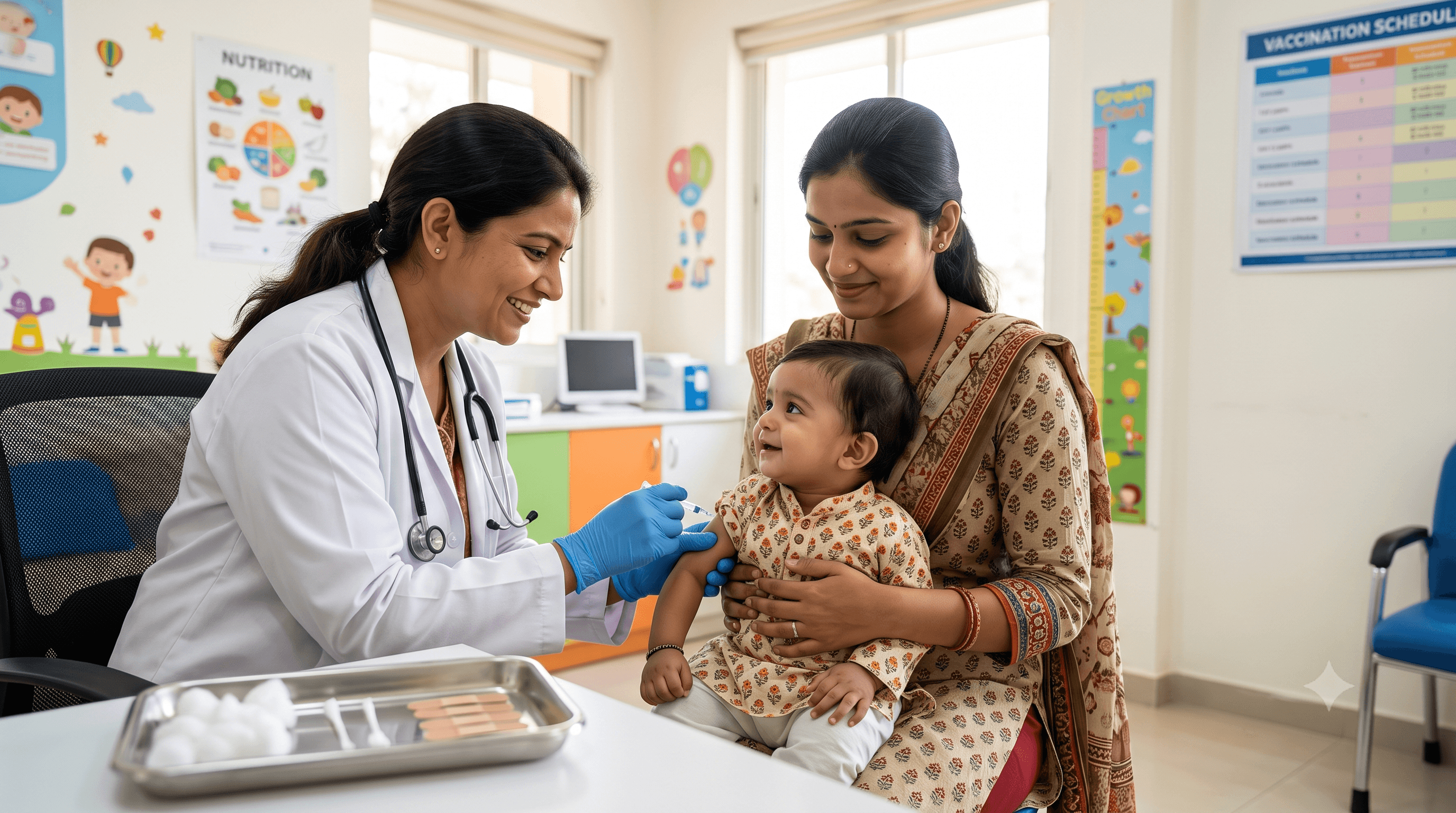
Why Vaccination Is Important for Your Child
Dr. Mayur Kumar Goyal
Published on July 20, 2026
Why Vaccination Is Important for Your Child
Every parent wants to keep their child healthy and protected from serious illnesses. Good food, proper sleep, hygiene, and regular health checkups all play an important role in a child's health.
But there is one more important part of protecting your child—vaccination.
Vaccines help protect children from several serious infectious diseases. They prepare a child's immune system to recognize and fight certain infections before those infections can cause serious illness.
For parents, understanding why vaccines are given and following the recommended vaccination schedule can help provide important protection during the early and growing years of a child's life.
How Do Vaccines Protect Your Child?
Our immune system is the body's natural defense against infections.
When a virus or bacteria enters the body, the immune system tries to recognize it and fight against it.
The problem is that when the body comes across a serious infection for the first time, it may not be prepared to fight it quickly enough.
This is where vaccines help.
Vaccines train the immune system to recognize specific infections and prepare a protective response against them.
You can think of it as giving your child's immune system a practice session before it faces the real infection.
If the child is exposed to that infection later, their immune system is better prepared to respond.
My Child Is Healthy. Does My Child Still Need Vaccines?
This is a common question among parents.
A healthy diet, physical activity, proper sleep, and good hygiene certainly help children stay healthy. However, being generally healthy does not provide specific protection against every infectious disease.
A healthy child can still become infected with diseases such as measles, polio, whooping cough, or other vaccine-preventable infections if exposed.
Vaccines provide specific protection against specific diseases.
That is why a healthy lifestyle and vaccination should work together rather than being considered alternatives.
Why Is Vaccination So Important for Children?
1. Young Children Are More Vulnerable to Some Infections
A baby's immune system is still developing during the early years of life.
This can make babies and young children more vulnerable to certain infections and their complications.
Vaccination helps provide protection during these important early years.
This is also why many vaccines are recommended during infancy and early childhood rather than waiting until the child grows older.
2. Vaccines Help Prevent Serious Diseases
Vaccination has helped protect children from many potentially serious diseases.
Depending on the recommended immunization schedule, vaccines can provide protection against diseases such as:
- Polio
- Measles
- Tetanus
- Diphtheria
- Pertussis (Whooping Cough)
- Hepatitis B
- Tuberculosis
- Rotavirus
- Pneumococcal Disease
- Other vaccine-preventable infections
Some of these illnesses can cause serious complications, particularly in babies and young children.
Vaccination helps reduce the risk of developing these preventable diseases and their complications.
3. Vaccination Is Safer Than Getting the Disease
Some parents wonder whether it is better for a child to develop natural immunity after getting an infection.
The problem is simple: to develop immunity through natural infection, the child first has to get the disease, which may not always be mild.
Some infections can cause severe illness, hospitalization, or long-term complications before the child develops immunity.
Vaccination allows the immune system to build protection without requiring the child to experience the full risks of the actual disease.
4. Vaccines Also Help Protect Other Children
Vaccination does more than protect one child.
When more children in a community are appropriately vaccinated, infections have fewer opportunities to spread.
This is especially important for babies and children with weakened immune systems.
By keeping your child's vaccinations up to date, you help protect both your child and the wider community.
Why Does My Child Need So Many Vaccines?
Parents often wonder why babies need so many vaccines at a young age.
The vaccination schedule is carefully designed to provide protection when children are most vulnerable and when vaccines can produce the best immune response.
Some vaccines require multiple doses to provide stronger and longer-lasting protection.
Following the recommended schedule ensures timely protection.
Why Are Booster Doses Needed?
Some vaccines require booster doses because protection may decrease over time.
Booster doses strengthen the immune response and help maintain long-term protection.
Completing the full vaccination schedule is essential.
What If My Child Misses a Vaccine?
Missing a vaccination does not always mean the schedule must start again.
Your pediatrician can recommend a catch-up vaccination schedule after reviewing your child's vaccination records.
Always carry your child's vaccination card during consultations.
Can My Child Get Vaccinated If They Have a Cold or Fever?
A mild illness does not always require vaccination to be postponed.
However, parents should consult their pediatrician if the child has fever, cough, vomiting, diarrhea, allergies, previous vaccine reactions, chronic illness, or is taking regular medicines.
Are Mild Reactions After Vaccination Normal?
Some children may develop mild fever, redness, swelling at the injection site, irritability, tiredness, or reduced appetite after vaccination.
These reactions are usually temporary.
If severe symptoms such as breathing difficulty, facial swelling, seizures, or extreme weakness occur, seek immediate medical attention.
Keep Your Child's Vaccination Record Safe
Maintain your child's vaccination records carefully.
These records help your pediatrician identify completed vaccines, pending doses, and boosters.
Keeping a digital copy can also be helpful.
Vaccination Is Only One Part of Keeping Your Child Healthy
Vaccination works best along with healthy habits such as a balanced diet, adequate sleep, physical activity, good hygiene, clean drinking water, regular health checkups, and growth monitoring.
Have Questions About Your Child's Vaccination?
Parents often have questions about vaccine schedules, boosters, missed vaccines, and vaccination during illness.
Instead of relying on social media or incomplete online information, consult a qualified pediatrician.
Every child is different, and vaccination advice should always be personalized according to age, medical history, and previous vaccinations.
Frequently Asked Questions (FAQs)
1. Why is vaccination important for children?
Vaccination protects children from serious infectious diseases and reduces the risk of complications.
2. Is vaccination necessary if my child is healthy?
Yes. Healthy children also need vaccines because a healthy lifestyle alone cannot prevent infectious diseases.
3. What should I do if my child has missed a vaccine?
Consult your pediatrician for a catch-up vaccination schedule.
4. Why do some vaccines require booster doses?
Booster doses strengthen and maintain immunity over time.
5. Can my child get vaccinated if they have a cold?
It depends on the child's condition. Always consult your pediatrician before vaccination.
6. Is fever normal after vaccination?
Mild fever and soreness are common temporary reactions after some vaccines.
7. Where can I get information about my child's vaccination schedule?
Your pediatrician can guide you according to your child's age and vaccination history.
8. Should I keep my child's old vaccination records?
Yes. Vaccination records help doctors determine completed and pending vaccines throughout childhood.