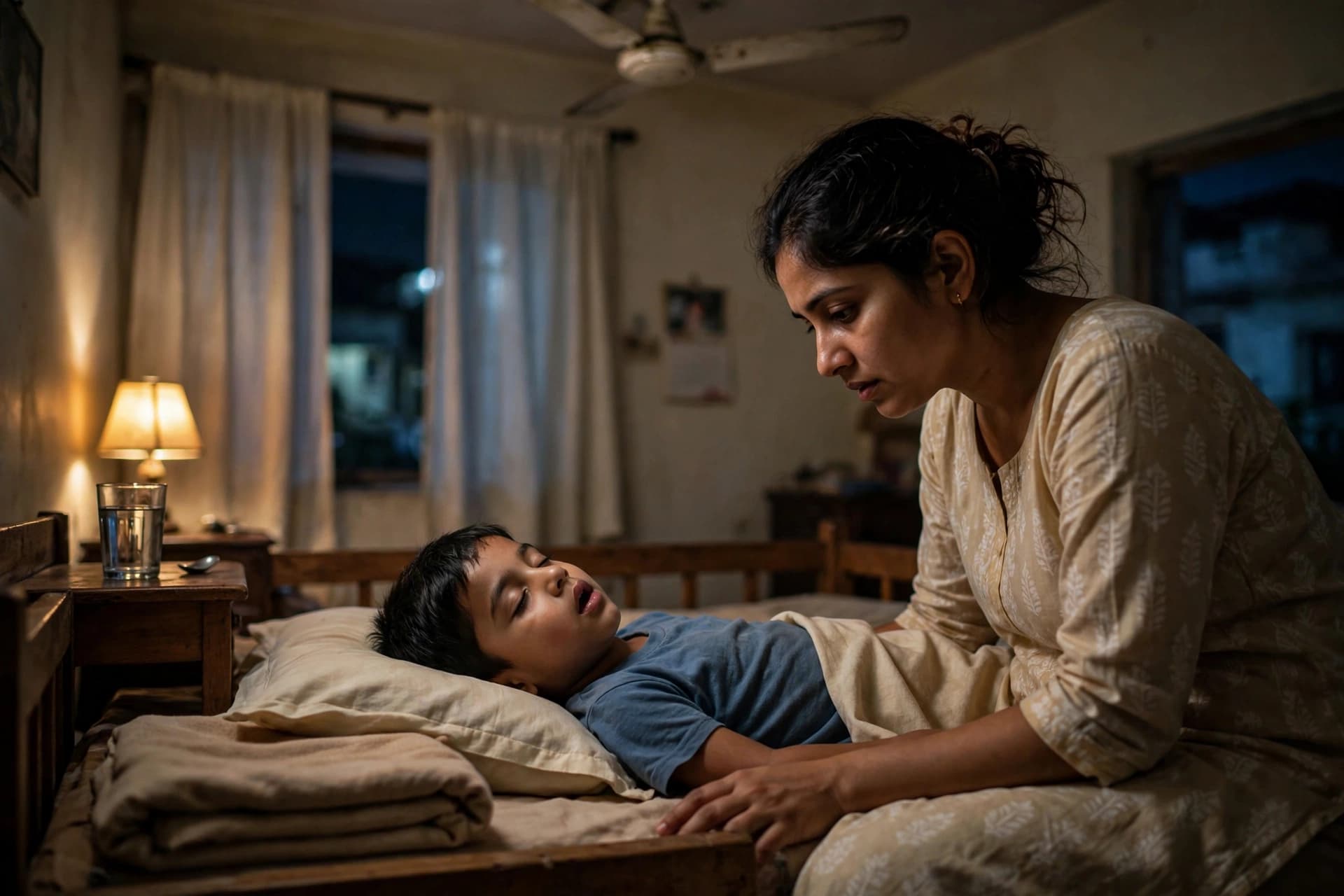
Why Does My Child Snore at Night? Causes, Warning Signs & When to See a Pediatrician
Dr. Mayur Kumar Goyal
Published on August 31, 2026
Why Does My Child Snore at Night?
Hearing your child snore while sleeping can sometimes be surprising for parents. Occasional snoring may happen when a child has a cold, blocked nose, or allergies. But if your child snores regularly, it is worth paying attention to.
Child snoring at night can have several causes. In some children, it may be related to enlarged tonsils or adenoids, nasal congestion, allergies, or other breathing difficulties during sleep.
Most cases are manageable when the cause is identified early. The important thing is to notice changes in your child's sleep and daytime behavior.
Common Causes of Snoring in Children
1. Cold and Blocked Nose
A simple cold can make the nose congested. When breathing through the nose becomes difficult, your child may breathe through the mouth and start snoring.
This type of snoring usually improves as the cold gets better.
2. Allergies
Dust, pollen, pet dander, or other allergens can cause nasal congestion. A child with allergies may have a blocked or runny nose and may snore more often at night.
3. Enlarged Tonsils or Adenoids
Tonsils and adenoids are tissues that help the body fight infections. When they become enlarged, they can sometimes make it harder for a child to breathe comfortably during sleep.
This is one of the common reasons for regular snoring in children.
4. Mouth Breathing
Some children naturally breathe through their mouth, while others do it because their nose is blocked. Frequent mouth breathing, especially during sleep, may be associated with snoring.
5. Sleep-Related Breathing Problems
In some children, loud and regular snoring may be connected with a condition called obstructive sleep apnea, where breathing becomes partially or completely blocked for short periods during sleep.
This needs medical evaluation rather than being ignored. If you notice these signs, consult a child specialist in Ajmer for proper assessment.
When Should Parents Be Concerned?
Occasional snoring during a cold is usually less concerning. However, parents should speak with a pediatrician if their child:
- Snores loudly or regularly
- Seems to stop breathing briefly while sleeping
- Gasps, chokes, or struggles to breathe during sleep
- Sleeps with the mouth open most of the night
- Frequently wakes up during the night
- Sweats heavily while sleeping
- Seems unusually tired during the day
- Has difficulty concentrating or behaves differently than usual
- Complains of morning headaches
These signs do not always mean that a child has a serious condition, but they deserve proper evaluation.
How Can Parents Help a Child Who Snores?
Parents can start by observing their child's sleeping pattern.
Keep the child's sleeping area comfortable and reduce exposure to known allergens if allergies are a concern. If your child has a cold or nasal congestion, follow appropriate advice from a healthcare professional.
Most importantly, avoid giving medicines or nasal products to a child without proper medical guidance.
If snoring continues even after a cold has gone away, discuss it with a pediatrician. Keeping your child's vaccinations and routine check-ups on schedule also helps your doctor track your child's overall respiratory and general health over time.
Why Early Attention Matters
Good sleep is important for a child's physical growth, learning, mood, and daily energy.
When a child regularly has difficulty breathing during sleep, the quality of sleep may be affected. Identifying the reason for snoring can help parents understand whether simple care is enough or whether further medical evaluation is needed.
Frequently Asked Questions (FAQs)
1. Is it normal for children to snore?
Occasional snoring can happen, especially during a cold or nasal congestion. Regular or loud snoring should be discussed with a pediatrician.
2. Can a blocked nose cause my child to snore?
Yes. A blocked nose can make nasal breathing difficult, which may lead to mouth breathing and temporary snoring.
3. When should I take my child to a doctor for snoring?
If your child snores regularly, breathes unusually during sleep, gasps, pauses breathing, or shows daytime tiredness or concentration problems, consult a pediatrician.
4. Can enlarged tonsils cause snoring?
Yes. Enlarged tonsils or adenoids can sometimes narrow the airway and contribute to snoring during sleep.
5. Does every snoring child have sleep apnea?
No. Snoring can have many causes, and not every child who snores has sleep apnea. A pediatrician can help determine the possible cause.
6. Should parents record their child's snoring?
If you notice unusual breathing, a short recording of the child's sleep may help a doctor understand what you are observing. It should be used as additional information and not as a replacement for medical evaluation.
Final Thoughts
Child snoring at night is often temporary, but regular or loud snoring should not simply be ignored. Paying attention to your child's sleep, breathing, and daytime behavior can help identify when professional advice may be useful.
If you are concerned about your child's snoring or sleep habits, consult a pediatrician for an appropriate evaluation and guidance.
Mayur Children Hospital focuses on providing child-friendly healthcare and helping parents understand their child's health needs with proper medical guidance.